A large academic healthcare environment wanted to make better use of the clinical data already generated across its hospital systems. The goal was to establish the foundation for a secure, structured healthcare data platform that could support medical research, education, advanced analytics, and future AI applications.
The initiative focused initially on oncology and diagnostic imaging data, assessing how existing clinical information could be transformed from operational data into a reliable, research-ready resource.
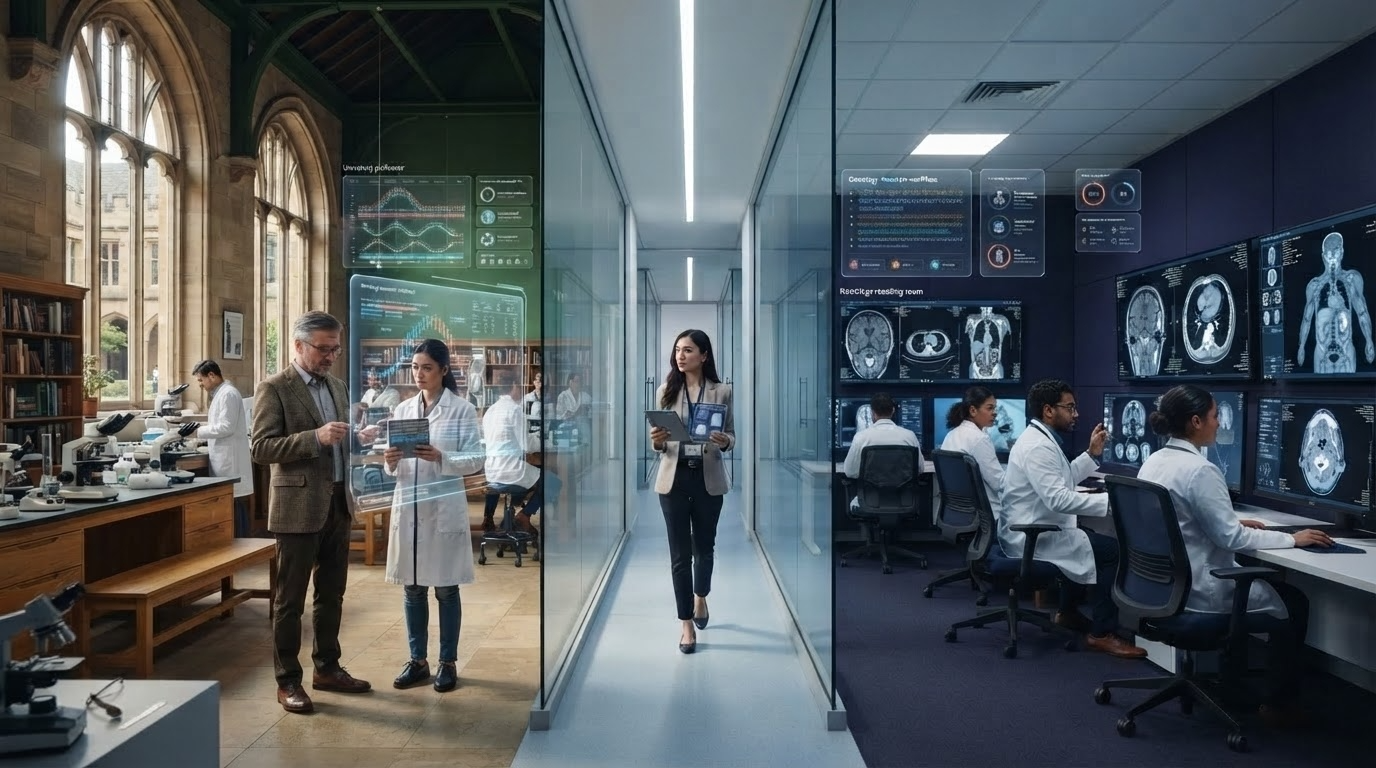
The Challenge: Turning Clinical Data into a Research-Ready Asset
Large volumes of digital healthcare data were already available across hospital information and medical imaging systems. However, these systems had primarily been designed for day-to-day clinical operations rather than research, analytics, or machine learning.
Some important information was stored as unstructured narrative text, while other data elements required for research were missing or recorded inconsistently. This made it difficult to perform cross-patient analysis, build comprehensive research datasets, and prepare the data for advanced analytics and future AI applications. At the same time, any future platform needed to ensure appropriate protection of sensitive patient information.
The Solution: Healthcare Data GAP Analysis and Platform Roadmap
A comprehensive healthcare data GAP analysis was conducted to assess the existing environment, identify data and technology gaps, define the desired future state, and create a practical roadmap for a centralized research data platform.
The three-month assessment combined infrastructure and data discovery with workshops involving clinicians, researchers, IT specialists, legal experts, and management. It evaluated data quality and completeness, existing applications and integrations, clinical indicators, security and governance requirements, and the structure needed for a future electronic patient record.
The proposed architecture defined a clear flow from existing clinical systems through secure data extraction and anonymization into a structured research database. The future-state concept also included automated synchronization, role-based access, centralized storage, governance and security controls, and support for advanced healthcare analytics, AI, and machine learning.
Results: A Clear Path from Healthcare Data to Research and AI
The assessment showed that the organization already had a strong foundation for developing a research-ready healthcare data platform. 98% of the healthcare data required for the identified research needs was already available within the existing environment, and 70% was already stored in structured, parameterized form. The analysis also confirmed that the existing systems could support secure extraction, anonymization, and loading of data into a dedicated research database.
Rather than moving directly into technology implementation, the project identified the remaining data, process, governance, security, and architecture gaps first. It also defined recommendations for structuring important clinical information, including symptom onset, consultation history, pathology findings, molecular diagnostics, therapy complications, and imaging outcomes.
The result is a structured implementation roadmap for a secure healthcare data platform, providing a clear path toward better use of clinical data for medical research, evidence-based decision-making, education, advanced analytics, and future AI-driven applications.
Project Information
Industry
Healthcare; Education
Client Type
Hospital; University
Project type
Healthcare Data GAP Analysis
Outcome
98% of Required Research Data Already Available