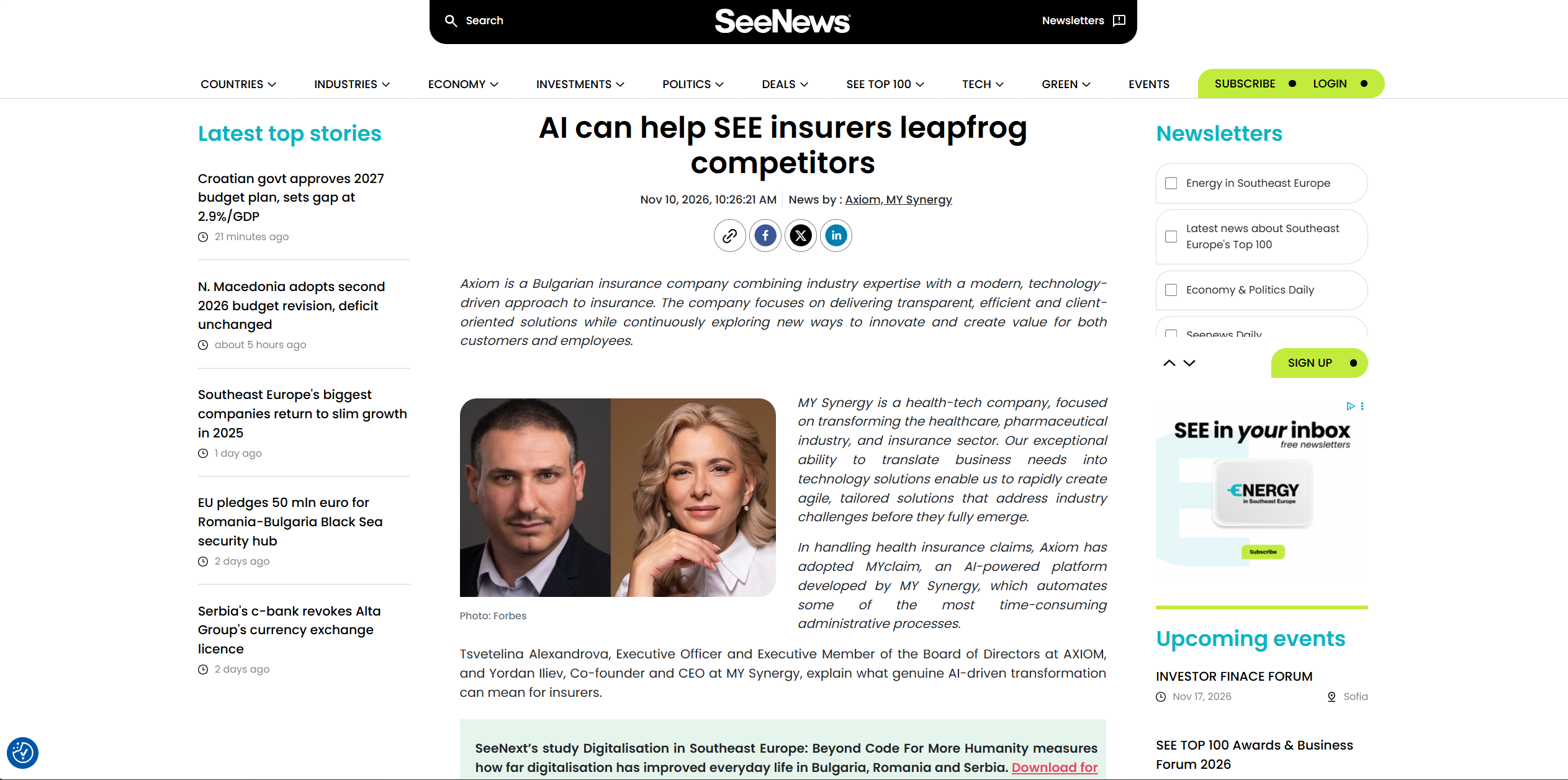
MY Synergy’s Pilot Study on AI-Based Lung Cancer Risk Prediction

Can a routine chest X-ray provide insights into a patient’s future risk of developing lung cancer?

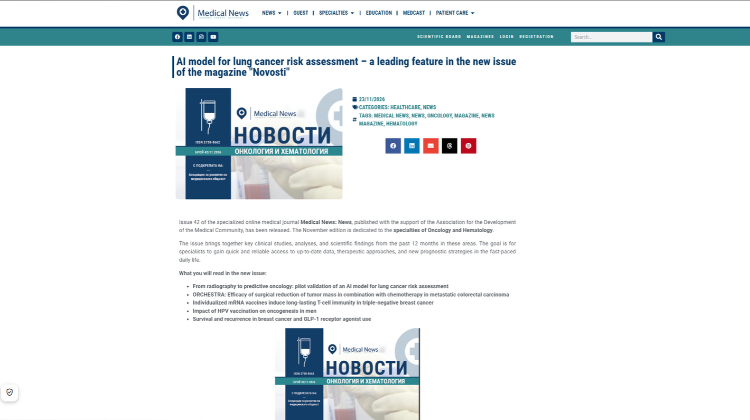
This question is at the heart of MY Synergy’s pilot research project, featured as the leading article in the November 2026 edition of Medical News’ specialized Oncology and Hematology publication.

Titled “From Radiography to Predictive Oncology: Pilot Validation of an AI Model for Lung Cancer Risk Assessment,” the article explores how artificial intelligence can extract additional prognostic information from existing medical images to support the early identification of patients at increased risk of developing disease.

AI in Predictive Oncology: Validating the Technology in Bulgaria

MY Synergy is conducting a pilot research study to validate the CXR Insights Pro AI model using data from the Bulgarian population.

The project involves the analysis of over 50,000 chest X-rays acquired during routine clinical practice. AI-generated risk assessments are compared with existing medical documentation and confirmed clinical diagnoses.

The objective is to evaluate the applicability of the technology within the Bulgarian healthcare system and its potential to support the early identification of patients at increased risk of developing disease.

What Is CXR Insights Pro?

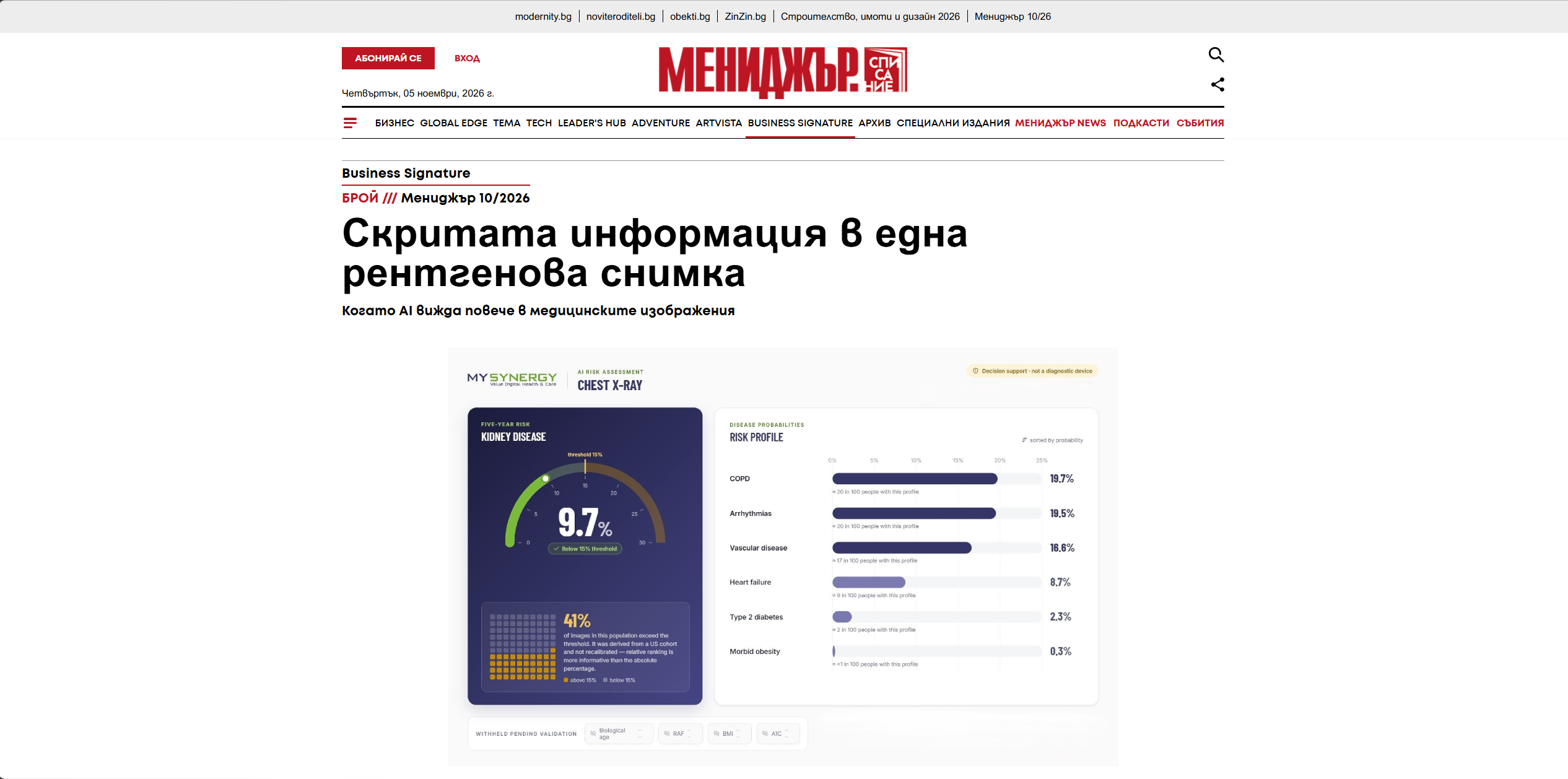
CXR Insights Pro is an AI-powered medical imaging analysis model that extracts quantitative imaging biomarkers associated with future disease development and long-term health risks from routine chest X-rays.

The model generates probabilistic risk assessments for:

    • Lung cancer;

    • Chronic obstructive pulmonary disease (COPD);

    • Heart failure;

    • Cardiac arrhythmias;

    • Vascular diseases;

    • Type 2 diabetes;

    • Chronic kidney disease.

Previous external validation studies involving over 400,000 chest X-rays from different populations reported an Area Under the Curve (AUC) of up to 0.79 for lung cancer risk prediction.

CXR Insights Pro is not a diagnostic tool. It does not detect tumors or establish diagnoses. Instead, it provides additional prognostic information that has the potential to support clinical decision-making and patient risk stratification.

Potential Clinical Benefits of AI-Based Risk Assessment

If successfully validated, the technology could support healthcare professionals in:

    • Identifying patients at increased risk before clinical symptoms emerge;

    • Selecting patients for further clinical evaluation and follow-up;

    • Assessing patients with incomplete medical histories or those outside conventional screening eligibility criteria;

    • Developing population-based risk identification programs;

    • Establishing more targeted preventive healthcare strategies.

A key advantage of this approach is its ability to use existing medical images and hospital Picture Archiving and Communication Systems (PACS), without requiring new imaging equipment, additional imaging procedures or radiation exposure for the AI analysis itself.

Our goal is not to automate medical decision-making, but to provide additional information that supports clinical expertise.

Daniela Taneva - Healthcare Technology Consultant, MY Synergy

From Medical Imaging to Predictive Healthcare

Through this research initiative, MY Synergy is exploring how healthcare organizations can make better use of the data already generated in everyday clinical practice.

The pilot study represents a first step towards evaluating AI-based risk stratification through chest X-rays in the Bulgarian clinical environment and understanding its potential role in predictive, preventive and precision medicine.

Or download it here: 

Related News